What Is a Boiler Drain Valve Actually Used for on Your Molding Equipment?
You need a quick mold change. The temperature control unit is full of hot, pressurized water, making the process slow and dangerous. How do you drain it efficiently?
A boiler drain valve is a simple utility port, usually with hose threads, designed for the controlled draining of a system. On a TCU or chiller, it's the official gateway for maintenance, system flushing, and freeze prevention.
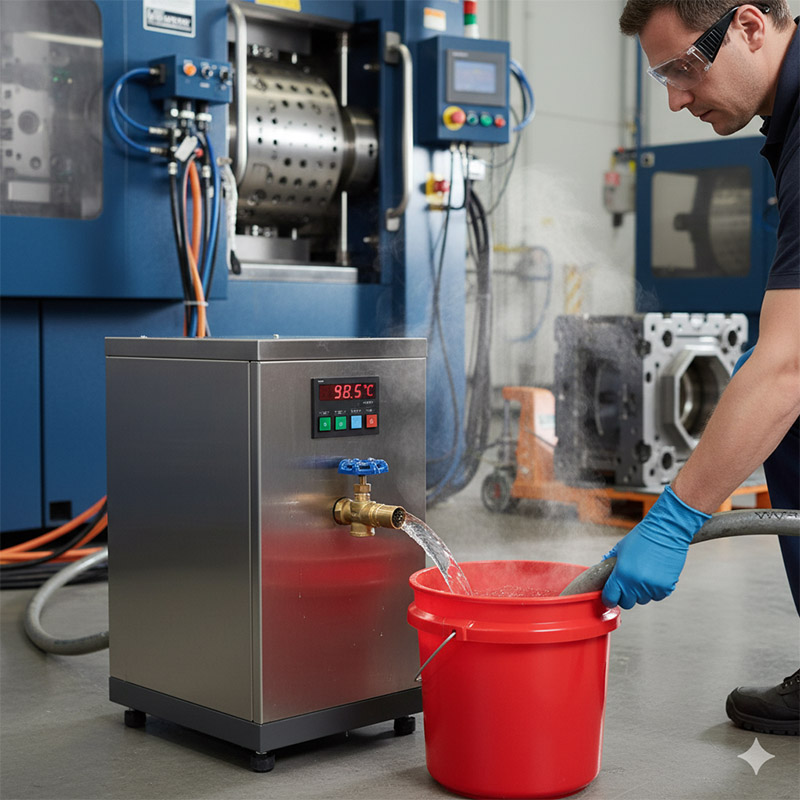
This simple valve is so often overlooked. I was once at a client’s facility where they were struggling with rust contamination in a series of molds. They were planning a massive, expensive plant-wide system flush. During a walkthrough, I pointed to the boiler drain valve on one of their main TCUs and asked when they last used it. They said, "Never. We don't drain them." I grabbed a bucket and a short hose, opened the valve for about ten seconds, and the bucket was immediately filled with rusty, sediment-filled water. They were shocked. The TCU itself was acting like a dirt trap, constantly feeding rust into their clean molds. We implemented a simple weekly flushing routine using that ignored valve, and their contamination issues dropped by 90% within a month. It proved that sometimes the most powerful maintenance tool is also the simplest.
Can You Use a Boiler Drain Valve for More Than Just Draining?
You're seeing mysterious sediment in your mold's cooling channels. Flushing the entire system is a huge job. Is there an easier way to check and clean your TCU?
Absolutely. A boiler drain valve is a perfect multi-tool. You can use it as a port for taking water samples, flushing out sludge, or even as an injection point for cleaning chemicals.
Think of it as a diagnostic and service port for the health of your process water. It’s located at the lowest point, making it the ideal spot to see what’s really going on inside your tank.
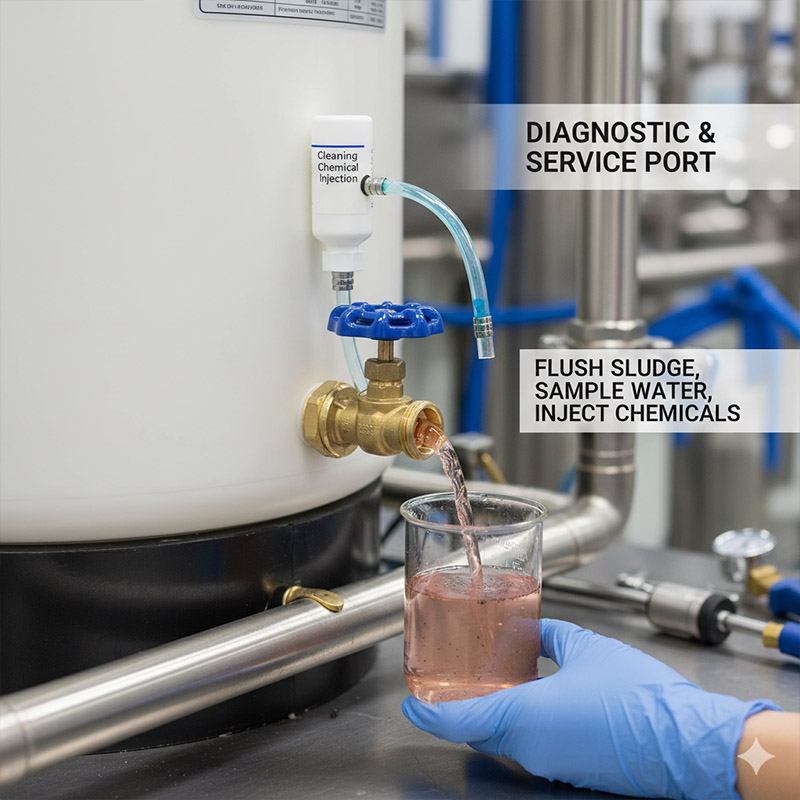
Beyond just emptying the tank, this valve unlocks several powerful maintenance routines. It provides a direct look into the health and cleanliness of the water you are sending to your expensive molds.
A Multi-Purpose Service Port
The boiler drain's position at the bottom of the tank is strategic. All the heaviest contaminants, like rust flakes and mineral scale, will eventually settle there. This makes the valve your first line of defense in water quality management.
- Taking Water Samples: You can easily check your water quality without a full shutdown. Just open the valve slowly and collect a sample after letting it run for a few seconds to clear the stagnant water in the valve itself. This allows you to monitor pH, check for biological growth, or test descaling chemical concentrations.
- Flushing Sediment: With the system running, you can open the valve for a quick 5-10 second burst into a bucket. The system pressure creates a high-velocity blast that forces out settled debris, preventing it from ever reaching your mold.
| Use Case | How It Works | Why It's Useful in Molding |
|---|---|---|
| Draining | Connect a hose and open the valve to empty the TCU. | Essential for maintenance, transport, or freeze protection. |
| Flushing | Open valve briefly while the system is under pressure. | Removes settled rust and scale from the tank bottom. |
| Sampling | Slowly open the valve to fill a test container. | Allows regular water quality checks without system downtime. |
Why Does My Boiler Drain Valve Always Seem to Leak?
You finish your maintenance and close the drain valve. But now it has a slow, steady drip that just won't stop, creating a mess and wasting treated water.
This is extremely common. Boiler drain valves leak because they are rarely used, which allows debris to get stuck in the seals and the internal rubber washers to harden and crack.
These valves are not designed for frequent use. Their simple construction makes them cheap and reliable for sitting idle, but prone to failure the moment you disturb them after a long period of inactivity.
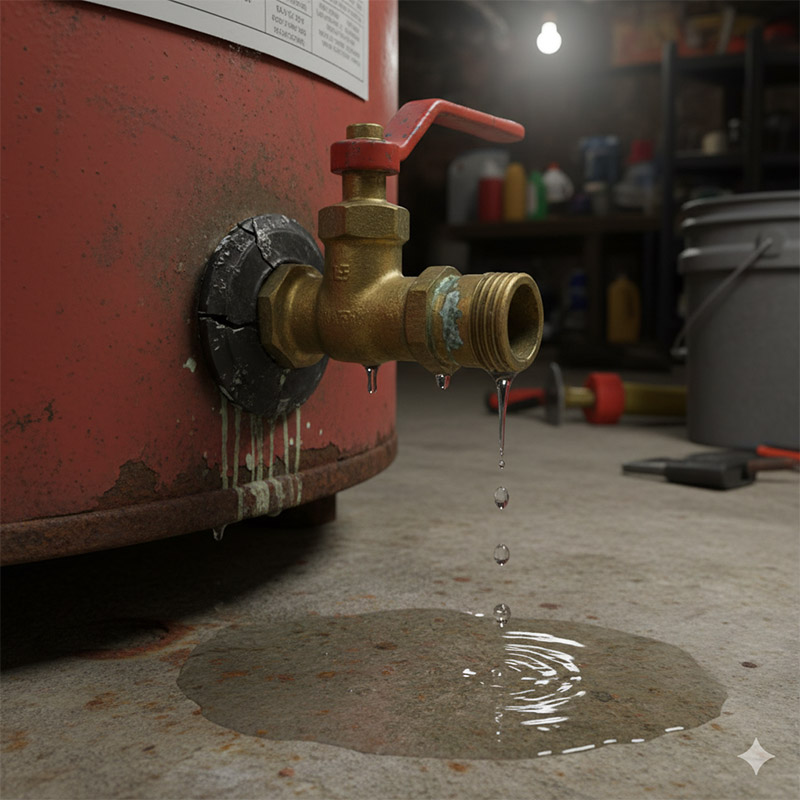
Dealing with a leaky drain valve is frustrating, but understanding why it happens makes the fix much easier. It's almost always a failure of the seal, not the valve body itself.
The Problem with Infrequent Use
When a valve sits closed for years, minerals in the water build up on the internal brass seat. The rubber washer that seals against this seat hardens over time. When you finally turn the handle, you are scraping this brittle washer across a rough, scaled surface. The washer often cracks, or a piece of scale gets permanently wedged on the sealing surface. This creates a small gap that allows water to drip out, a leak that will never fix itself. The very act of using the valve after a long time is what often causes it to fail.
Quick Fix vs. Full Replacement
On an older multi-turn valve, you might be able to replace the washer inside. However, given the low cost of a new valve, it's almost always faster and more reliable to replace the entire unit. For modern quarter-turn ball-type drain valves, they are sealed units and not serviceable at all. The best strategy is to simply keep a spare valve on hand. Replacing it takes five minutes and is a permanent fix.
| Problem | Common Cause | The Best Solution |
|---|---|---|
| Dripping from Spout | Debris on valve seat or a worn/cracked washer. | Try opening and closing the valve fully a few times to flush debris. If it persists, replace the entire valve. |
| Leaking from Stem | The packing nut behind the handle is loose or its seal is worn. | Gently tighten the packing nut with a wrench. If this doesn't work, the valve should be replaced. |
Conclusion
That simple boiler drain valve is a key utility port. Use it regularly for draining, flushing, and sampling, and don't hesitate to replace it at the first sign of a leak to keep your process reliable and clean.