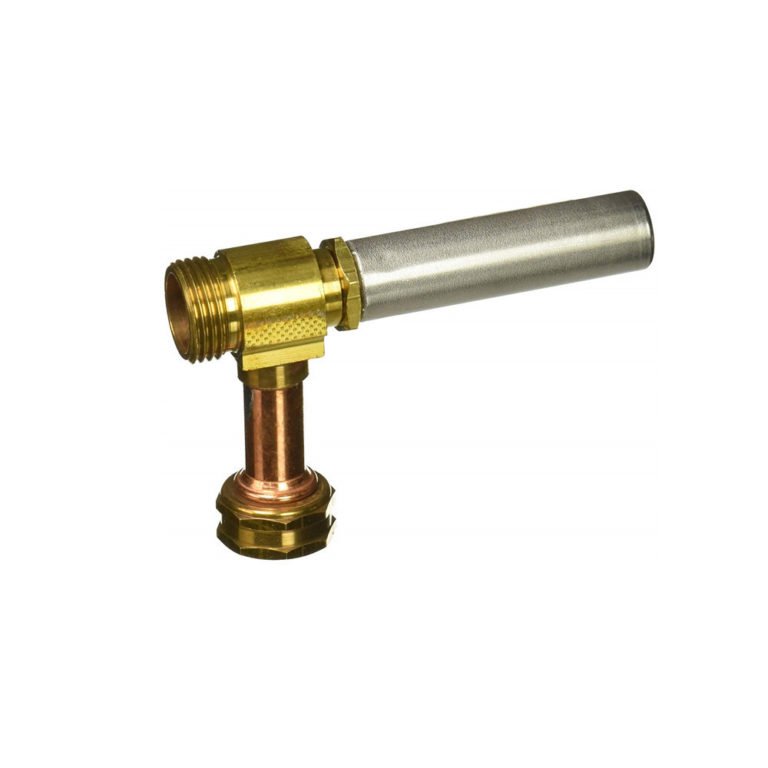










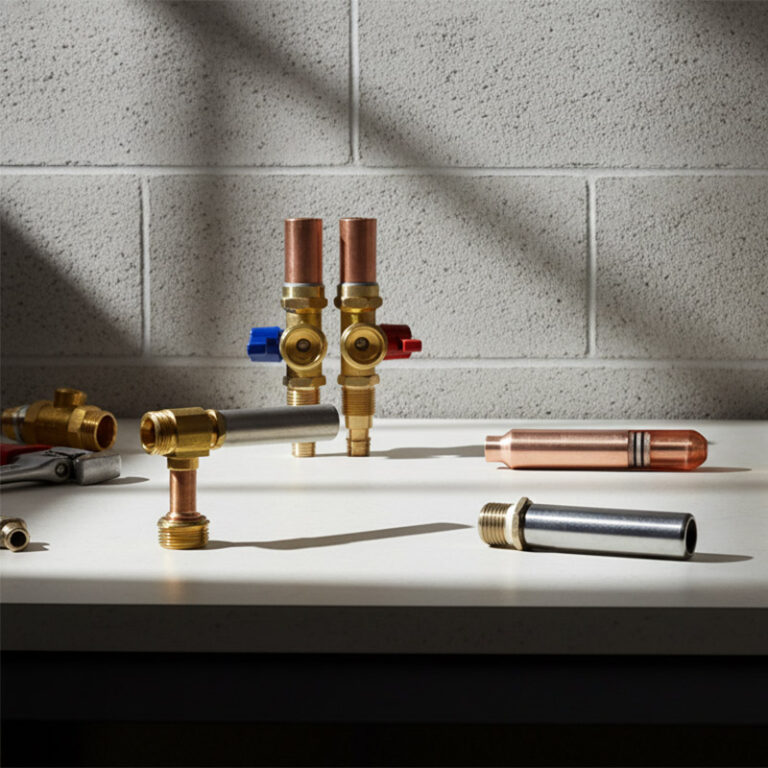








As a specialized water hammer arrester manufacturer, Fanovo provides a factory-direct supply of engineered solutions designed to eliminate destructive hydraulic shock in plumbing systems. We produce a comprehensive range of piston-type and diaphragm-type arresters for residential, commercial, and industrial applications.
Wholesale distributors, plumbing contractors, and OEMs partner with our factory to source durable, certified water hammer arresters that protect pipes, valves, and appliances from the damaging effects of sudden pressure spikes. Our commitment to quality engineering ensures quiet operation and extends the life of any plumbing installation.
Why Source Water Hammer Arresters Directly from the Fanovo Factory?
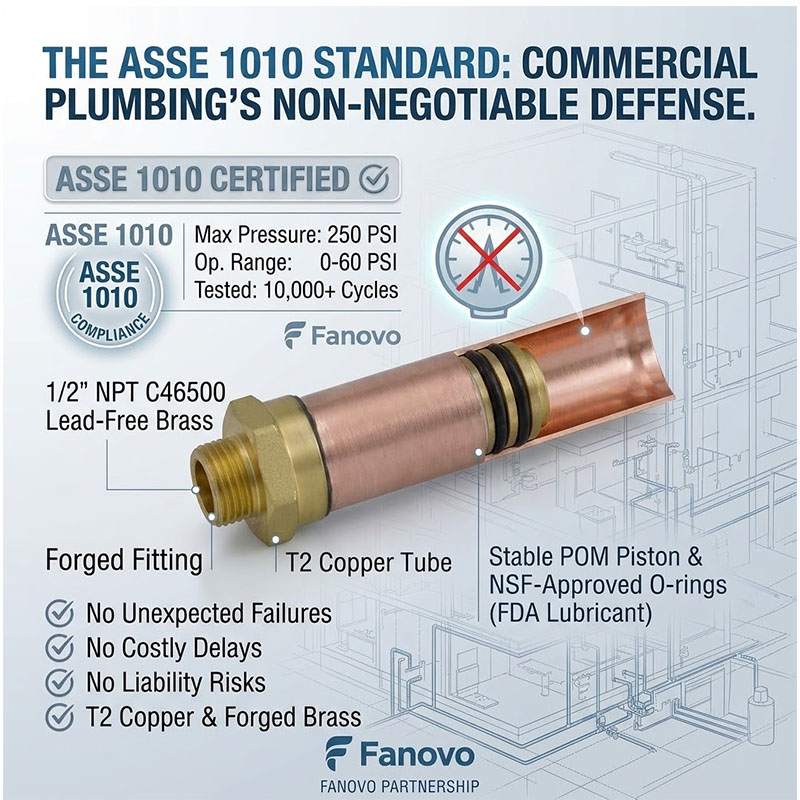
Certified Performance & Code Compliance: Install with absolute confidence. Our water hammer arresters are designed, tested, and certified to ASSE 1010 and are cUPC listed. This guarantees they meet stringent North American plumbing codes for performance and safety, eliminating the risk of system damage and ensuring inspection approval.
Factory-Direct Wholesale Pricing: Enhance your profit margins by sourcing directly from the manufacturer. We offer premium, certified arresters at a highly competitive price point, providing exceptional value for bulk and wholesale orders.
Superior Construction for Maximum Longevity: Our arresters feature a heavy-duty, lead-free brass body, a maintenance-free sealed piston design, and high-grade O-rings. This robust construction ensures lifelong protection against water hammer without ever requiring a recharge.
Your OEM & Private Label Partner: We are an experienced OEM supplier capable of providing water hammer arresters for integration into appliances, plumbing manifolds, and specialized equipment. We offer customization options for connection sizes, pressure ratings, and private labeling to meet your exact specifications.


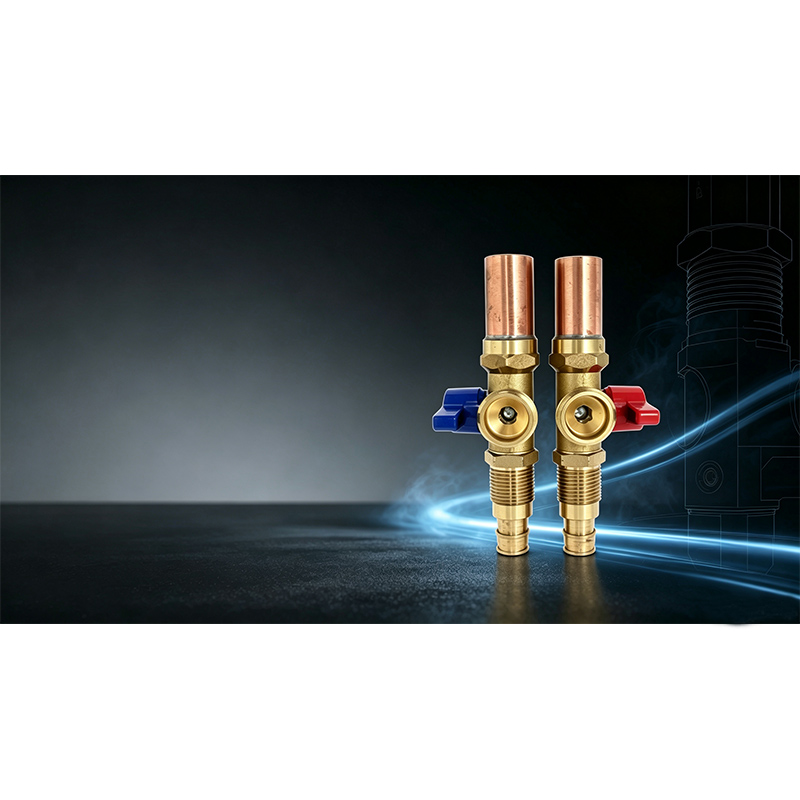
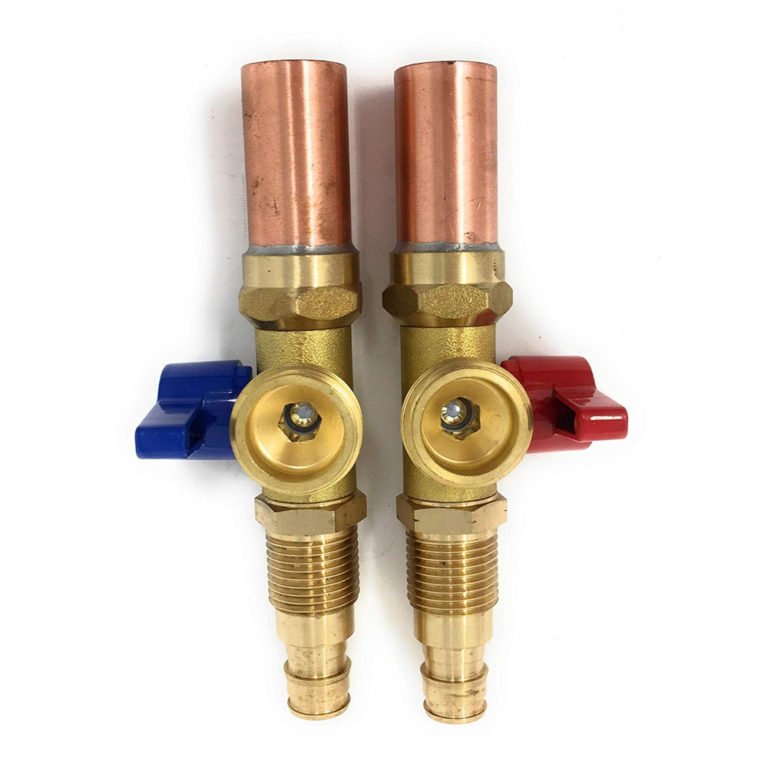
The refrigeration service valve, also known as air conditioning service valve, is widely fitted on outdoor condensing units, heat pumps and refrigeration compressors. It acts as a control point for refrigerant charging, pressure testing, vacuum pumping, system maintenance and refrigerant recovery. The dual-valve design separates liquid line and suction line, allowing technicians to safely isolate the compressor and perform service work without fully discharging the whole refrigeration system.
The main body is forged high-quality brass, featuring strong corrosion resistance and excellent sealing performance. The connecting tube is pure copper for easy brazing connection. The internal valve core adopts wear-resistant rubber seal components, stable under normal refrigeration system working pressure. All raw materials comply with common HVAC industry standards, suitable for long-term use with R22, R410A, R134a and other mainstream refrigerants.
Our brass service valves are compatible with most common refrigerants, including R22, R410A, R32, R134a, R404A, R407C. We strictly control internal sealing materials to avoid chemical reaction with refrigerants and refrigeration oil. If you work with special new refrigerants, you can inform our team so we can confirm material compatibility in advance.
Yes. We support customized copper tube extension length, different flare thread specifications, barb connection sizes and valve body structure. Standard models are in stock for fast delivery. For bulk orders, we accept OEM modifications including size adjustment, color of plastic handle, and packaging requirements. You can send your detailed dimensional drawing for quotation.
Standard service valves can withstand a maximum working pressure up to 4.5MPa. Every finished valve goes through air tightness pressure testing before shipment to eliminate leakage risks. They meet the pressure requirements of most residential and commercial air conditioning and medium-low temperature refrigeration systems.
We adopt precision machined valve spool structure and high resilience sealing gaskets. Under correct installation and standard operation, the valves maintain reliable sealing after repeated opening and closing. We recommend avoiding excessive force when twisting the plastic handle, which may damage internal sealing parts and cause slow refrigerant leakage.
The copper extension end needs to be brazed to the air conditioning pipeline. During welding, you must use wet cloth cooling on the brass valve body to prevent high temperature from burning the internal rubber seals. After welding is finished and the pipe cools down completely, carry out pressure leakage test. Do not apply excessive torque on the threaded port of the service access.
Liquid line valves are usually matched with smaller pipelines for high-pressure liquid refrigerant, while suction line service valves connect larger pipelines for low-pressure gaseous refrigerant. In most matched sets, you can distinguish them by copper tube diameter. The red and blue plastic handles help field technicians quickly identify high-pressure and low-pressure ports during maintenance.
Regular standard sizes support small trial orders. For stocked standard models, MOQ is flexible. If you need customized sizes or OEM branding, higher minimum quantity will apply. Contact our sales team to confirm stock status and bulk order discounts.
Under normal working conditions, without external impact and improper high-temperature welding, the service life can match the lifecycle of conventional air conditioning units. Storage environment should stay dry. Long-term exposure to humid, salty marine environment will accelerate surface oxidation; anti-corrosion surface treatment can be offered for coastal projects on request.

Restoring the Lifeline: The Role of Advanced Flow Control in Disaster Recovery The news from Venezuela is deeply saddening. On behalf of the entire Fanovo team, our hearts go out to all the families a
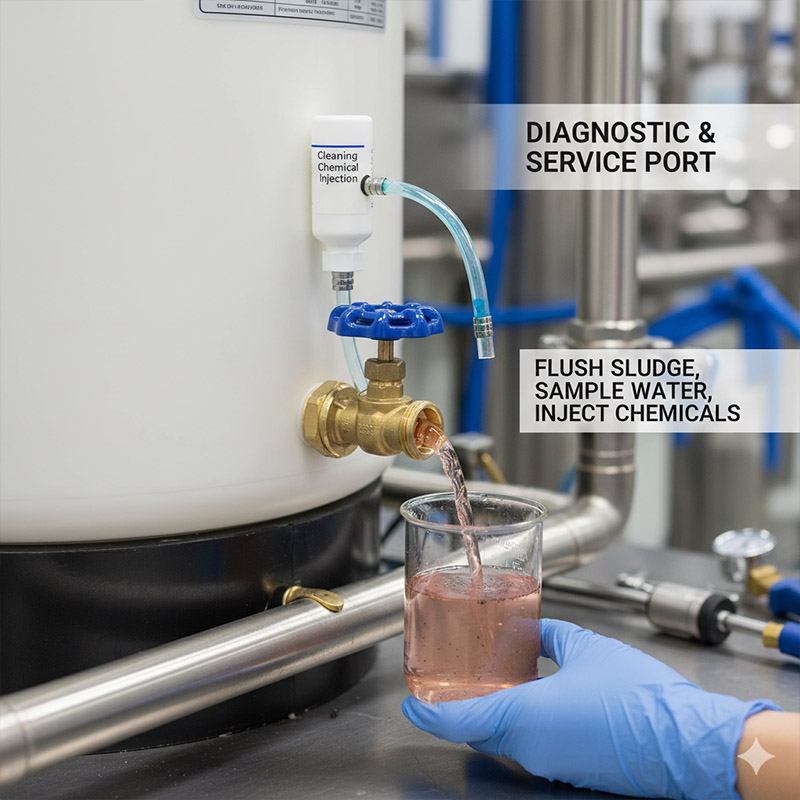
What Is a Boiler Drain Valve Actually Used for on Your Molding Equipment? You need a quick mold change. The temperature control unit is full of hot, pressurized water, making the process slow and dang

How Do You Know if Your Mold’s Bypass Valve is Open or Closed? Your mold temperature is unstable, causing defects. You suspect a flow issue, but the chiller seems fine. Is a hidden valve sabotaging yo
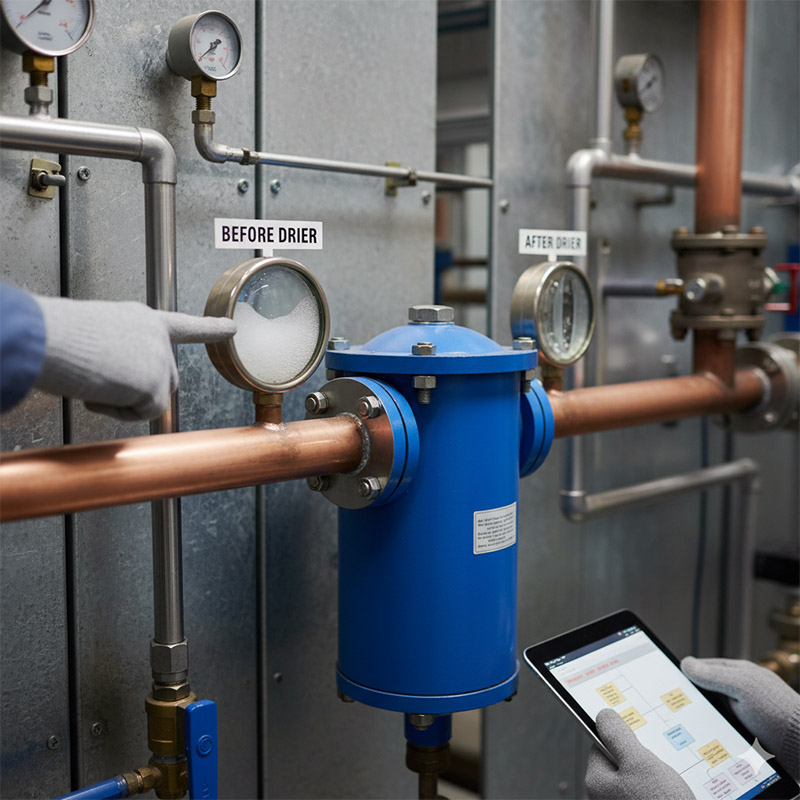
Should Your Chiller’s Sight Glass Go Before or After the Filter-Drier? You’re desperately trying to fix a chiller that isn’t cooling your mold properly. The sight glass looks clear, but you still susp
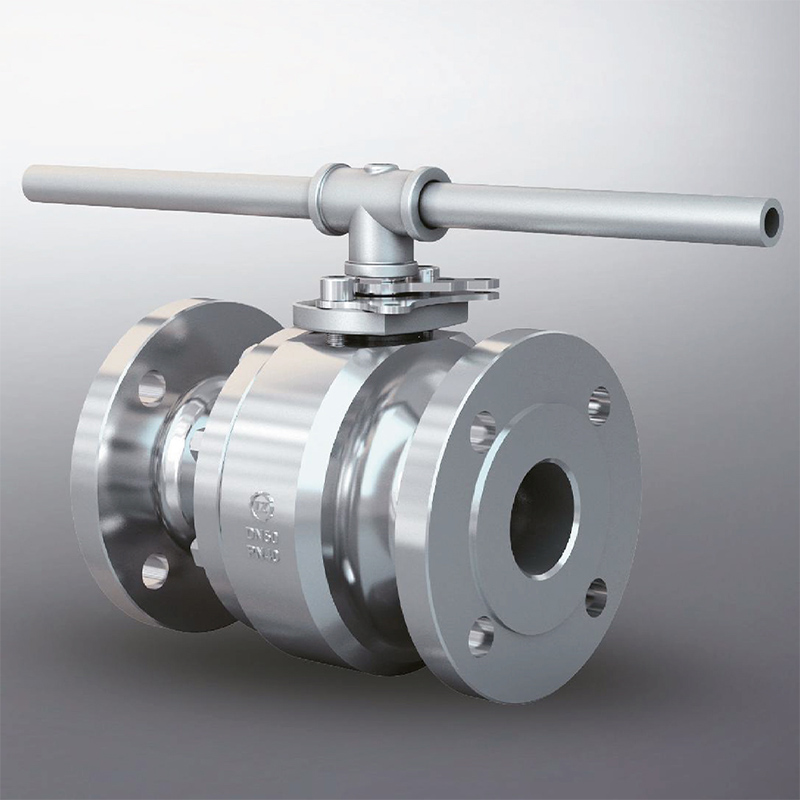
How Does an Industrial Float Valve Keep Your Chiller Tank from Running Dry? The emergency alarm sounds. Production halts. The problem isn’t the mold or the machine, but an empty chiller tank that has

Do Your Mold Sight Glasses Really Need Special Maintenance? You installed them on every cooling line. Now you just glance at them, trusting the little spinners or floating balls. But are you ignoring